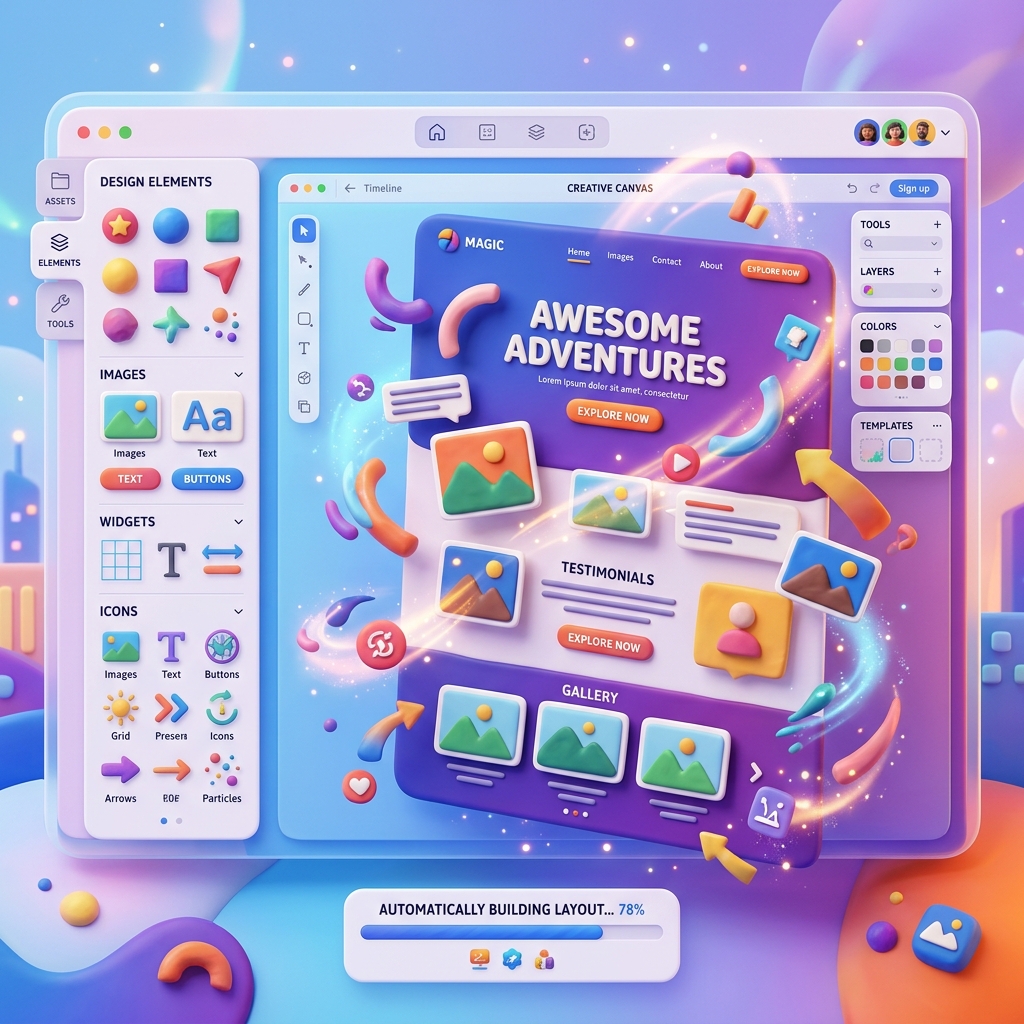
Low-code and no-code platforms are democratizing software development, enabling non-technical users to build applications while empowering professional developers to work faster.
What Are Low-Code and No-Code?
- No-Code: Visual development platforms that require zero programming knowledge. Users build applications by dragging and dropping components.
- Low-Code: Platforms that provide visual development tools alongside the ability to write custom code when needed.
The Market Landscape
The low-code/no-code market is projected to reach $187 billion by 2030. Major players include:
- Webflow: Visual web design and hosting
- Bubble: Full-stack application builder
- Retool: Internal tool builder
- Airtable: Database and workflow platform
- Make (formerly Integromat): Automation and integration platform
Who Benefits?
Business Users
- Build custom solutions without waiting for IT
- Automate repetitive workflows
- Create prototypes quickly for validation
Professional Developers
- Accelerate development of common patterns
- Build admin panels and CRUD apps in hours instead of days
- Focus on complex, high-value features
When to Use Low-Code
Low-code is ideal for:
- Internal tools and dashboards
- Workflow automation
- Prototypes and MVPs
- Simple customer-facing applications
When to Use Traditional Development
Traditional coding is still the right choice for:
- Complex, performance-critical applications
- Applications requiring fine-grained control
- Systems dealing with sensitive data
- Products that need differentiation at the code level
The Hybrid Future
The future is not low-code vs. traditional development — it is both. Teams that strategically combine low-code tools for appropriate use cases with traditional development for core products will be the most productive.
Conclusion
Low-code and no-code platforms are powerful additions to the developer toolkit. Understanding when and how to use them is a valuable skill for modern development teams.