
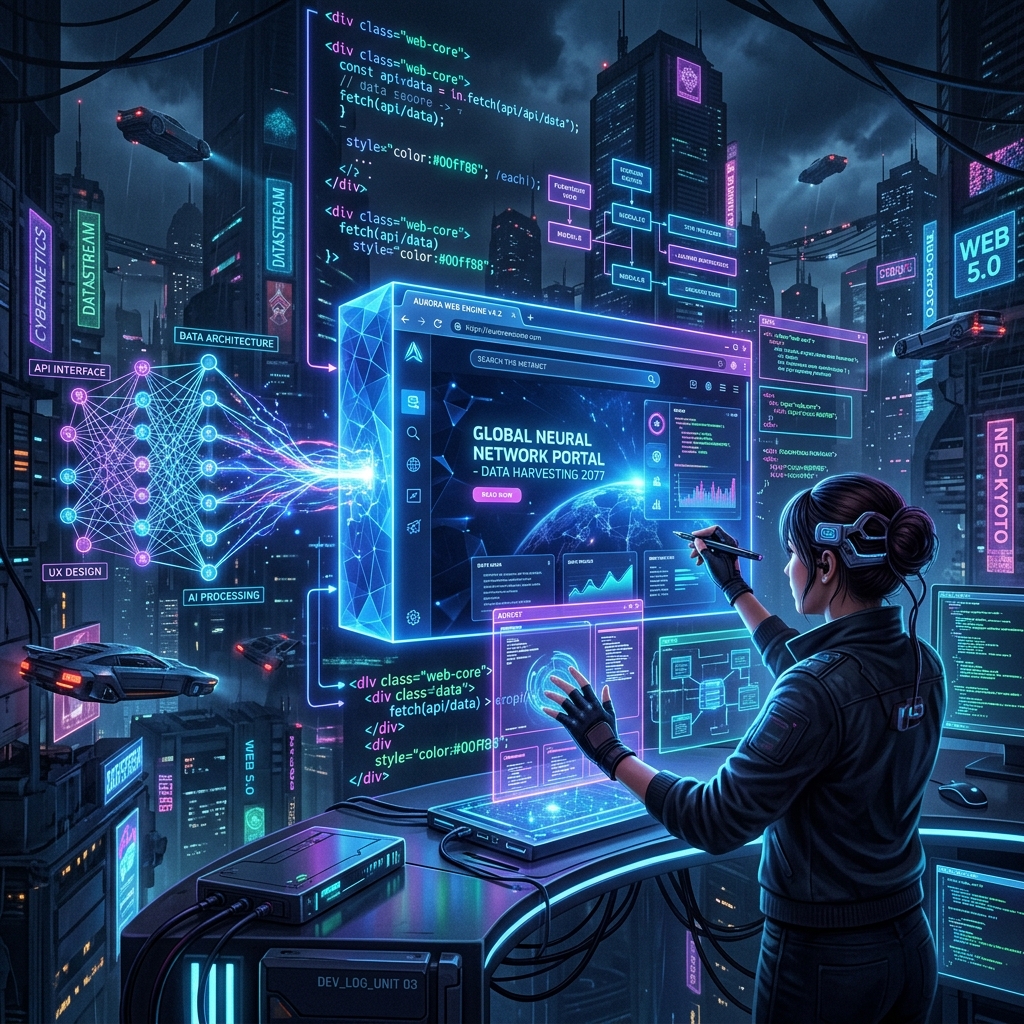
The web development landscape is evolving faster than ever. In 2026, we are seeing a convergence of AI-assisted development, edge computing, and immersive web experiences that are redefining what is possible in the browser.
AI-Assisted Development
AI coding assistants have matured from simple autocomplete tools into full-fledged pair programmers. Tools like GitHub Copilot, Claude, and Cursor are now capable of understanding entire codebases, generating complex components, and even debugging production issues. This shift has dramatically reduced development time, allowing teams to focus on architecture and user experience rather than boilerplate.
Edge-First Architecture
The move toward edge computing continues to accelerate. Frameworks like Next.js and Remix have made it seamless to deploy server-rendered applications at the edge, reducing latency to milliseconds. Combined with edge databases and KV stores, developers can now build globally distributed applications with minimal infrastructure overhead.
WebAssembly Beyond the Browser
WebAssembly (Wasm) is breaking out of the browser. With tools like Wasmtime and Wasmer, developers are running Wasm modules on servers, in edge runtimes, and even on mobile devices. This opens up possibilities for running performance-critical code — like video encoding, scientific computing, and game engines — anywhere JavaScript runs.
Immersive Web Experiences
Thanks to improvements in WebGL, WebGPU, and three.js, the line between native and web applications continues to blur. 3D product configurators, virtual showrooms, and interactive data visualizations are becoming standard fare. The web is no longer just about documents — it is a platform for rich, immersive experiences.
The Bottom Line
2026 is an exciting time to be a web developer. The tools are more powerful, the infrastructure is faster, and the possibilities are endless. Staying ahead means embracing these changes and continuously learning.